Manometer Reference Articles

Table of Contents
(Click link to view article as PDF)

1. Death by Hyperventilation:  Study concluded that professional rescuers consistently hyperventilated patients with average ventilation rate of 30 bpm, three items the AHA recommended rate.  Excessive ventilation rates inhibit venous blood return to the right heart and are associated with decreased survival rates.
Clearly demonstrates that average delivered breaths per minute among trained EMS personnel were at a mean rate of 37 bpm with a mean inspiratory pressure of 50cm/H2O.  Even after re-training the mean breath rate was 22 bpm at a mean inspiratory pressure of 44.5cm/H2O.  Still well above the AHA guidelines of 10 breaths per minute inspiratory pressures well in excess of the Lower Esophageal Opening Pressure of 20cm/H2O.

Excessive ventilation rates = increased inspiratory pressures = decreased coronary perfusion pressures = decreased survival rates.

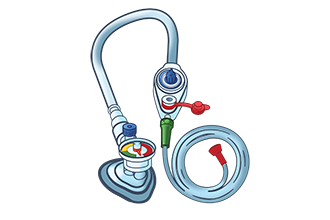
A manometer enables the caregiver to monitor inspiratory pressures.  When inspiratory pressures are kept below the LESOP at 20cm/H2O breath rates are automatically reduced and gastric insufflations are avoided or minimized.

2. Duke Bench Study, Use of a Pressure Manometer:  Concluded that Peak Inspiratory Pressure (PIP's) are much more consistent when RCP's utilized an in line pressure manometer during manual resuscitation.  A manometer provides the caregiver a means to deliver consistent and controlled inspiratory pressures to avoid lung injury such as barotrauma, volutrauma, and aids in avoiding gastric insufflations and the potential subsequent consequences which could include death.

3. Use of a Pressure Manometer Enhances Student Performance During Manual Ventilation:  Study provides quantitative evidence that a pressure manometer is an effective tool that can improve the accuracy and reduce the variability of peak airway pressures during manual ventilation.  Information from the manometer provides added objective information that can be used in conjunction with each patient's clinical status.

4. Manual Ventilation and Risk of Barotrauma:  Primum Non Nocere; Latin phrase and precept taught in medical school which means, "First, Do No Harm", so as to make sure one considers the possible harm that intervention may do.  The study recommends the use of a pressure manometer mounted on the resuscitation bag to act as a direct feedback mechanism to enable the clinician to actually know what they are doing which could help in adjusting bag ventilation technique.  Use of a pressure manometer increases accuracy and reduces variability of manual ventilation.

5. Lower Esophaheal Sphincter Pressure During Cardiac Arrest:  As LESP pressures are overcome, the stomach becomes inflated which increases intragastric pressures, elevates the diaphragm, restricts lung movement, and in turn reduces respiratory system compliance and lung ventilation which may cause severe complications such as aspiration, pneumonia, and possibly death.  LESP pressures drop rapidly from 20cm/H2O to around 5cm/H2O during cardiac arrest. 

6. VAP: Ventilator Associated Pneumonia:  States that pneumonias caused by bacterial invasion of the respiratory tract can prolong a patient's stay in ICU by 43 days and costs approximately $20,000 - $30,000 to treat.  Gastric insufflations can cause vomiting, aspiration and subsequent chemical or bacterial pneumonias, which can result in death.  VAP claims the lives of up to one third of those who acquire it.  Manometer use can help eliminate or minimize gastric insufflations and therefore reduce the risk of vomiting, aspiration, and possible subsequent pneumonias.

7. Peak Pressures During Manual Ventilation:  Study found that peak airway pressure generated by trained therapists was sometimes in excess of 100cm/H2O and concluded that high airway pressures during manual ventilation would be considered "extreme" in the context of mechanical ventilation, which raises question about whether manual ventilation causes barotraumas.  Use of a manometer provides a feedback device to enable therapists to monitor inspiratory pressures.

8. Lung Protective Strategies:  States ARDS network limited plateau pressures to 30cm/H2O to avoid barotraumas.  States that the damage done through barotraumas is considered catastrophic in that pneumothorax can become tension pneumothorax (which is life threatening).  Use of a pressure manometer provides feedback to clinicians to be able to balance keeping the patient ventilated, with pressure held in check.

9. Evaluation of 16 Adult Manual Resuscitators:  Study evaluated 16 resuscitation bags and found that the Ventlab adult bag outperformed all other resuscitators, maintaining FDO2 of 100% under all tested conditions.  FDO2 is arguably the most important aspects of a disposable manual resuscitator and the Ventlab adult bag out performed all others.


PRINT               Close Window